
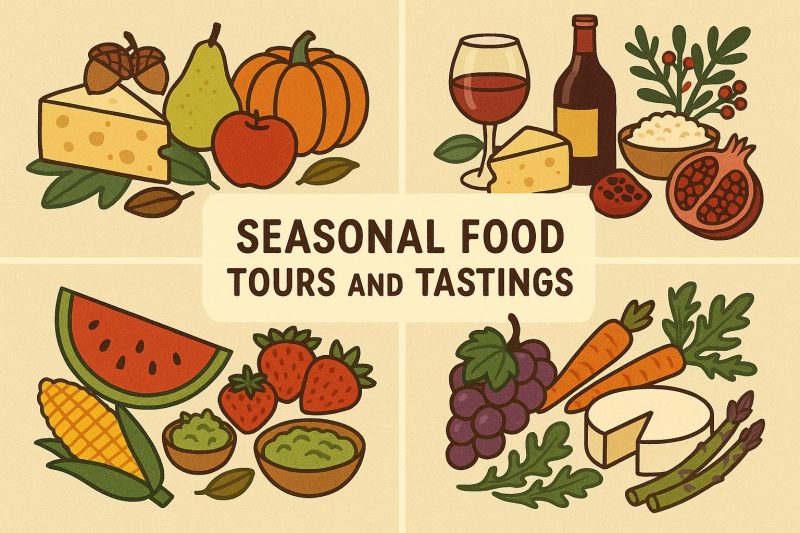
Introduction to Seasonal Food Tours
Seasonal food tours offer an exceptional way to immerse oneself in the culinary world, focusing on foods that are at their peak freshness during certain times of the year. These tours not only provide delectable tastings, but they also play a pivotal role in supporting the local economy by promoting regional farmers and producers. By connecting consumers with these local sources, seasonal food tours encourage sustainable practices and culinary exploration.
Understanding the Seasonal Tasting Experience
Seasonal tastings are curated to deliver an experience rich in flavors and textures that might otherwise be unavailable at non-peak times. Each season brings a unique assortment of produce that can be savored during these tours. In the spring, for instance, you might delight in the crispness of asparagus or the sweetness of strawberries. Autumn, on the other hand, could bring the earthy aromas of pumpkins and the tartness of freshly-picked apples. This approach ensures that there is always something new for the palate, as menus and experiences are consistently updated to reflect the season’s bounty.
Benefits of Seasonal Eating
The advantages of consuming foods in their natural season are manifold. Seasonal food tours emphasize these benefits by introducing participants to fresher, more flavorful, and often more nutritious foods. Eating seasonally supports environmental sustainability by minimizing the need for long-distance transportation of produce, thereby reducing carbon emissions. Local consumption also bolsters the local economy by providing direct support to farmers and producers who follow sustainable agricultural practices.
For those interested in learning more about the advantages of seasonal eating and how to incorporate it into their lifestyle, resources such as the Seasonal Food Guide offer comprehensive insights and guides.
Examples of Seasonal Food Tours Around the World
Seasonal food tours are a global phenomenon, each country and region offering unique culinary experiences tied to its local agriculture:
Italy: The Tuscan region, renowned for its rich culinary heritage, hosts seasonal tours focused on autumn delicacies like truffles, chestnuts, and freshly-pressed olive oil. Participants engage with the region’s traditions and learn about the historical importance of these ingredients.
Japan: In a country where the changing seasons are celebrated with enthusiasm, springtime tours coincide with the cherry blossom season, offering tastings of limited-edition sweets and uniquely crafted teas. Meanwhile, autumn brings flavors centered around mushrooms and sweet potatoes, immersing participants in Japan’s seasonal diversity.
United States: Napa Valley in California is famed for its wine production, and its grape harvest season in late summer to fall presents a celebration of wine and viticulture. Seasonal tours not only include tastings of fresh grape juices and new wines, but also offer vineyard tours and cooking workshops, all highlighting the valley’s dedication to quality produce.
Planning Your Own Seasonal Tour
To organize a memorable seasonal food tour, the following elements should be considered:
Research Local Offerings: A thorough understanding of which foods are in season is crucial. By researching local produce, you can select tours that emphasize these ingredients, ensuring a genuine experience that aligns with nature’s cycles.
Consider Timing: Many tours take advantage of local harvest festivals and regional events, which coincides with the peak of particular produce seasons. Planning your visit around these festivals can enhance your experience and provide additional cultural insights.
Engage with Local Experts: Collaborating with local chefs, culinary experts, and guides can greatly enrich your tour. These professionals offer invaluable perspectives on traditional dish preparations and the cultural history behind the ingredients, elevating the educational aspect of your adventure.
Engaging in seasonal food tours offers travelers an authentic taste of diverse cuisines while fostering a deeper understanding of the local food systems and the natural cycles of food production. To explore various food tour options, including those that align with different seasons across the globe, potential travelers can visit GetYourGuide which provides a comprehensive range of selections tailored to food enthusiasts.
In conclusion, seasonal food tours present a harmonious blend of taste, education, and environmental consciousness. They cater to epicureans eager to savor regional flavors at their peak, all the while promoting sustainable practices and supporting the agricultural communities that enrich our tables with delightful seasonal offerings. By participating in these tours, one not only indulges in gastronomic adventures but also contributes to the preservation and celebration of cultural and environmental heritage.
